
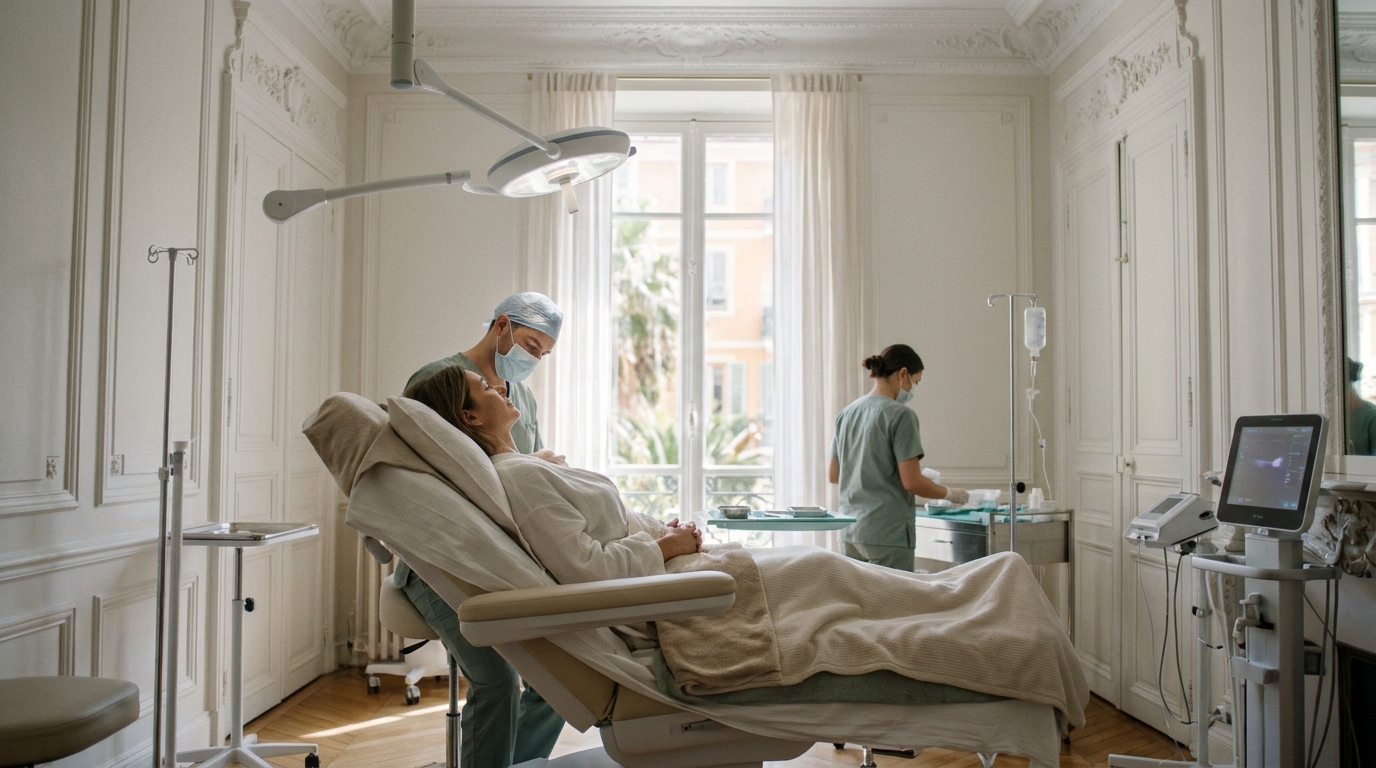
Undergoing a facelift under local anaesthesia is a distinct sensory experience that prioritizes patient comfort and awareness. You remain awake while the treated areas are thoroughly numbed, feeling primarily sensations of pressure or movement. At the Clinique de la Riviera in Nice, this approach allows for a calmer, more controlled surgical environment. The goal is to manage anxiety while ensuring the surgeon can work with precision on your unique anatomy.
The Sensory Experience During Surgery
Many patients worry about feeling the surgery, but local anaesthesia effectively blocks pain signals. You will feel a stinging sensation when the anaesthetic is first injected, which lasts only a few minutes. Once the area is numb, the surgeon performs the procedure, and you may feel a dull pressure or a sensation of pulling. This is normal and indicates the anaesthetic is working. The consultation process at our clinic prepares you for these specific sensations, so you are not caught off guard.
Because you are awake, you can communicate with the medical team. If you feel any discomfort or anxiety, you can let them know immediately. This direct feedback loop is a significant advantage of local anaesthesia. It transforms the operating room from a place of isolation into a collaborative space where your comfort is actively managed.
Managing Anxiety and Mental State
The psychological aspect of being awake is often the biggest hurdle. It is common to feel a mix of anticipation and nervousness. To manage this, patients are often offered mild sedation, which helps you relax without putting you to sleep. You might feel drowsy or heavy-lidded, but you remain responsive. This state is often described as a calm, detached awareness.
At the Clinique de la Riviera, the team focuses on creating a reassuring atmosphere. The operating room is designed to be comfortable, and the staff are trained to provide continuous verbal reassurance. Knowing that a qualified plastic surgeon is guiding the process helps many patients feel more at ease. The environment is kept quiet and professional, minimizing external stressors.
Post-Operative Sensations and Recovery
After the surgery, the local anaesthetic wears off, and you may experience aching or tightness in the face and neck. This is part of the healing process and is managed with prescribed pain relief. Swelling is expected and peaks in the first few days. You will likely feel a sense of fullness in the treated areas. This is temporary and subsides as the inflammation resolves.
Recovery under local anaesthesia is often smoother than under general anaesthesia. You may avoid the grogginess and nausea that can accompany waking up from general anaesthesia. You can go home the same day, which is a significant benefit. The frequently asked questions section on our website provides detailed guidance on what to expect during the first week of recovery.
Why Choose Local Anaesthesia for a Facelift
Local anaesthesia is not just a convenience; it has medical benefits. It allows the surgeon to assess the tissue response in real-time. This can lead to more precise adjustments and a more natural result. The reduced physiological stress on the body also means a faster return to normal activities. You are not subjected to the systemic effects of general anaesthesia, which can be taxing for some patients.
This approach is particularly suitable for patients who are anxious about general anaesthesia or who have specific medical conditions that make general anaesthesia less desirable. It is a safe and effective option for many facelift procedures. The aesthetic surgery team at our clinic evaluates each patient individually to determine if local anaesthesia is the right choice for their specific case.

Key Takeaways
- Local anaesthesia blocks pain signals, leaving sensations primarily of pressure or movement.
- Mild sedation can be used to manage anxiety and promote relaxation.
- Patients remain awake and can communicate with the surgical team.
- Post-operative recovery often involves less grogginess than general anaesthesia.
- The procedure allows for real-time assessment of tissue response by the surgeon.
- Recovery is typically faster, with a same-day discharge in most cases.
- A thorough consultation is essential to prepare for the sensory experience.
Frequently Asked Questions
Will I feel pain during the facelift?
The local anaesthetic is designed to numb the area and block pain signals. You may feel pressure or a pulling sensation. The initial injection of the anaesthetic causes a brief stinging sensation.
Can I go to sleep during the procedure?
You may feel drowsy if mild sedation is used, but you remain awake and responsive. You will not be in a deep sleep as you would be under general anaesthesia.
Is local anaesthesia safer than general anaesthesia?
Both are safe when administered by qualified professionals. Local anaesthesia avoids the systemic risks of general anaesthesia, but the choice depends on your individual health profile and the complexity of the surgery.
How long does the numbness last?
The numbness from local anaesthesia typically lasts for several hours after the surgery. You may feel a dull ache as it wears off, which is managed with pain relief.
Can I eat and drink after the procedure?
Yes, you can usually eat and drink after the anaesthetic has worn off. It is recommended to start with soft foods and stay hydrated to support healing.
What if I feel anxious during the surgery?
You can communicate with the team at any time. They are trained to provide reassurance and can adjust the sedation level if needed to help you relax. Learn more: Acc s contact et.