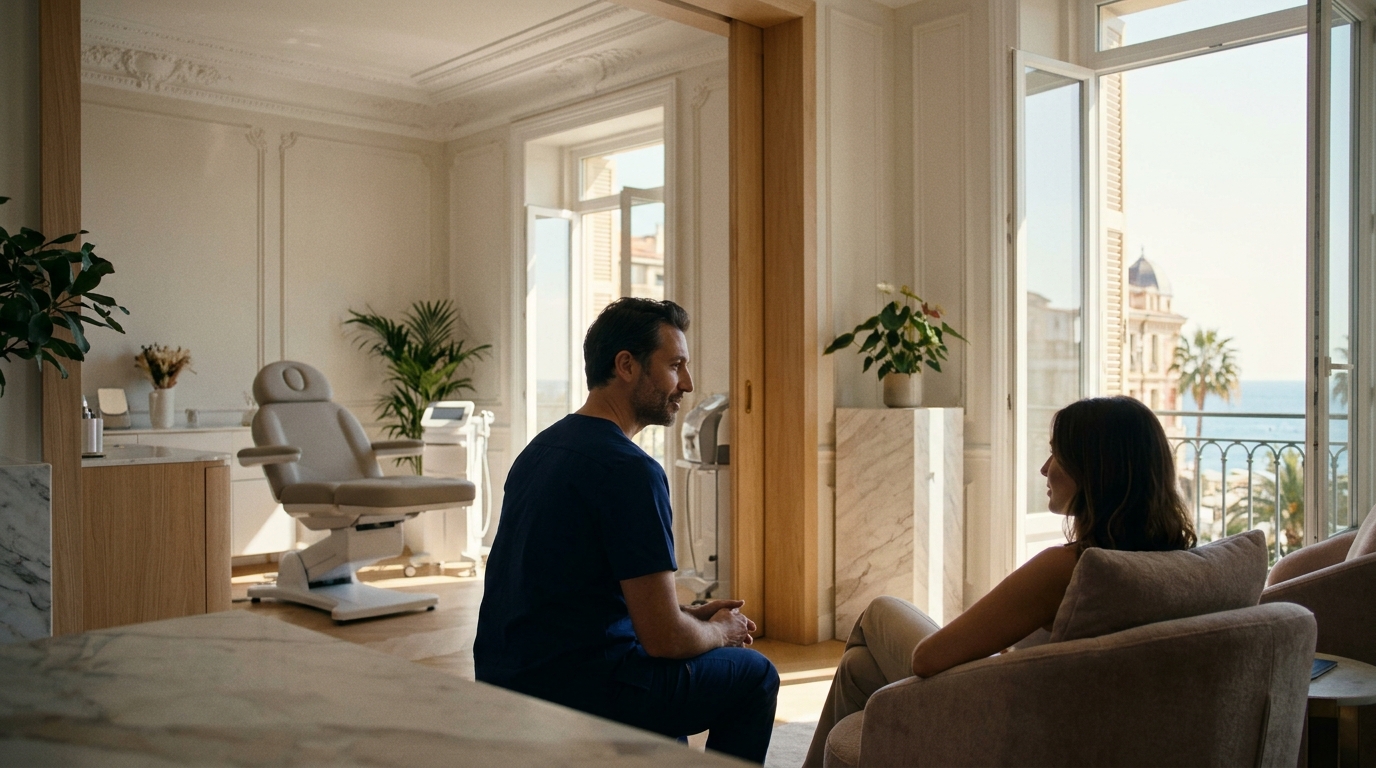
Yes, a facelift can be performed under local anaesthetic on the French Riviera. This approach allows patients to remain awake during the procedure, reducing the risks associated with general anaesthesia. Clinique de la Riviera, located in Nice, provides expert guidance on this method. This guide covers the specific anaesthesia options, the mini facelift procedure, and the practical considerations for patients seeking care in the region.
Facelift Anaesthesia Options
Choosing the right anaesthetic is a critical decision in any surgical plan. Local anaesthesia is a technique where medication is injected directly into the tissue to numb a specific area of the body. In the context of a facelift, this means the patient remains conscious while the treated zones are numbed. General anaesthesia, by contrast, renders the patient completely unconscious. The choice between these two methods depends on the extent of the surgery, the patient's medical history, and personal preference.
Understanding Local Anaesthesia with Sedation
Most modern facelifts performed under local anaesthesia utilize a combination of local numbing agents and intravenous sedation. This technique, often called "twilight sleep," allows the patient to relax deeply or even drift off into a light sleep while the surgeon works. The patient can be woken up if necessary to check symmetry or movement. This approach significantly lowers the risk of respiratory complications compared to general anaesthesia. It also allows for a faster post-operative recovery in terms of cognitive clarity.
Medical Safety and Patient Selection
Not every patient is a suitable candidate for local anaesthesia. A thorough medical evaluation is required to assess cardiovascular health, respiratory function, and anxiety levels. Patients with severe anxiety or certain cardiac conditions may be better suited for general anaesthesia. The surgeon must ensure that the patient can tolerate being awake during the procedure. At Clinique de la Riviera, the medical team prioritizes safety by conducting detailed pre-operative assessments to determine the safest anaesthetic protocol for each individual.
Benefits for the French Riviera Patient
Mini Facelift Procedures
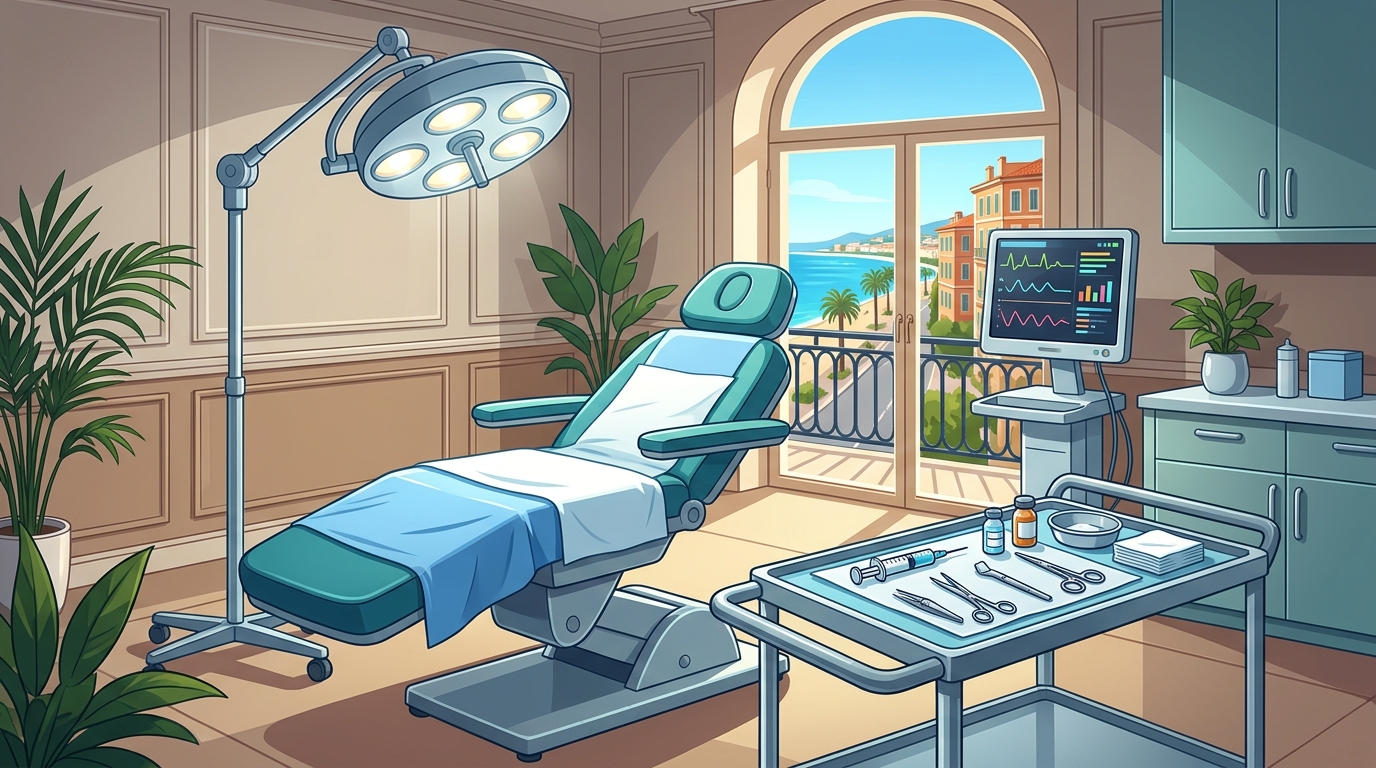
The mini facelift is a less invasive alternative to the traditional full facelift. Mini facelift is a surgical procedure that targets specific areas of facial aging, such as the lower face and neck, with smaller incisions. This technique is ideal for patients with mild to moderate skin laxity who wish to avoid the extensive scarring associated with a full lift. It is frequently performed under local anaesthesia, making it a popular choice for those seeking a natural-looking rejuvenation with minimal downtime.
Techniques and Incision Placement
Comparison of Facelift Types
Understanding the differences between a mini facelift and a full facelift helps patients make an informed decision. The table below summarizes the key distinctions between these two procedures.
| Incision Size | Small, hidden in hairline and ear | Larger, extending into hairline and around ear |
| Area Treated | Lower face and neck | Entire face, including mid-face and forehead |
| Anaesthesia | Local with sedation or general | General anaesthesia typically required |
| Recovery Time | 1 to 2 weeks | 2 to 4 weeks |
| Ideal Candidate | Mild to moderate aging | Significant skin laxity and aging |
Longevity and Maintenance
The results of a mini facelift are long-lasting but not permanent. As the natural aging process continues, the skin will eventually relax again. However, the procedure can delay the need for a full facelift by several years. Patients are often advised to maintain their results with non-surgical treatments, such as injectables or laser therapy. These complementary treatments can help preserve the youthful appearance achieved through surgery. Regular follow-up appointments with the surgeon are essential to monitor healing and discuss any further maintenance options.
Key Takeaways
- Facelifts can be safely performed under local anaesthesia with sedation.
- Local anaesthesia reduces the risks associated with general anaesthesia.
- The mini facelift is a less invasive option suitable for mild to moderate aging.
- Patients must undergo a thorough medical evaluation to determine anaesthesia suitability.
- Local anaesthesia allows for real-time communication with the surgeon during the procedure.
- Recovery from a mini facelift is generally faster than from a full facelift.
- Clinique de la Riviera in Nice provides expert care for patients seeking these procedures.
- Non-surgical treatments can help maintain the results of a facelift over time.
Frequently Asked Questions
Is a facelift under local anaesthesia painful?
Local anaesthetic numbs the surgical area, and sedation helps ensure that the patient remains relaxed and comfortable throughout the procedure. Most patients report feeling sensations of pressure or movement rather than sharp discomfort. The surgeon monitors the patient's comfort continuously and can adjust medication as needed.
How long does a mini facelift take?
A mini facelift typically takes between two and four hours, depending on the specific techniques used and the extent of the correction required. This is shorter than a full facelift, which can take five to eight hours. The shorter duration is one of the advantages of the mini facelift, particularly when performed under local anaesthesia.
Can I travel to Nice for a facelift under local anaesthesia?
Yes, many international patients travel to the French Riviera for this procedure. The local anaesthesia option makes it easier to manage the immediate post-operative period, as patients are more alert and can communicate with their care team. Clinique de la Riviera is located in the Carré d'Or district of Nice, offering a convenient and comfortable setting for recovery.
What are the risks of local anaesthesia?
How long do the results of a mini facelift last?
The results of a mini facelift can last for several years, typically between five and ten years. The exact duration depends on the patient's age, skin quality, and lifestyle factors. Maintaining a healthy lifestyle and using non-surgical treatments can help prolong the results. Regular consultations with the surgeon are recommended to monitor the aging process and discuss any further interventions.
What should I expect during recovery?
Recovery from a mini facelift involves some swelling, bruising, and discomfort, which are normal parts of the healing process. Patients are advised to rest and avoid strenuous activities for the first two weeks. The swelling usually subsides within a few weeks, and the final results become visible after three to six months. Following the surgeon's post-operative instructions is crucial for a smooth recovery.
Is the mini facelift suitable for everyone?
No, the mini facelift is not suitable for everyone. It is best for patients with mild to moderate skin laxity. Patients with significant skin sagging or deep wrinkles may require a full facelift for optimal results. A consultation with a qualified surgeon is necessary to determine the most appropriate procedure for each individual's unique facial structure and aging pattern. Learn more: Checking your browser.